
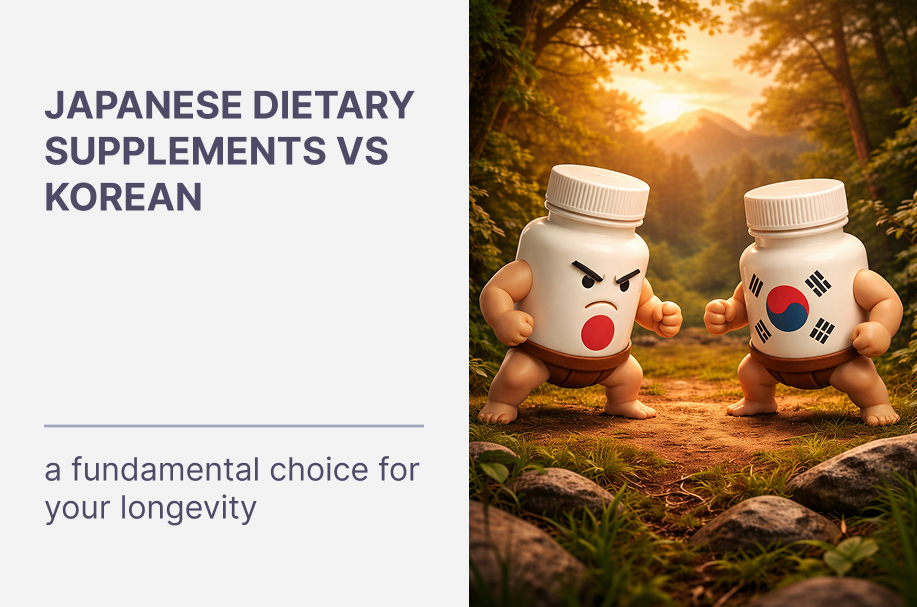
Not Just Supplements, But a Health Philosophy
When we talk about health and active longevity, our gaze involuntarily turns to the East. Japan consistently ranks first in the world for life expectancy, and South Korea is in the top 10. This phenomenon is not an accident but the result of a symbiosis of traditional nutrition, advanced medicine, and a culture of preventive approach to health. This is where the key difference lies between Japanese and Korean dietary supplements.
While Korean supplements often follow global trends and focus on aesthetics and quick results, Japanese supplements represent a deeper, scientifically grounded philosophy aimed at systemic healing and prevention. They are not just capsules with extracts; they are a fusion of centuries-old traditions and advanced technologies.
In this article, we present a detailed evidence-based compariso and explain why Japanese supplements from the JapanesBeauty assortment are considered the gold standard in the world.
The Foundation of Trust - Why the World Chooses Japan
1. Numbers that speak for themselves
- Life expectancy: according to the World Health Organization (WHO), Japan ranks 1st globally with an average life expectancy of 84.3 years. South Korea ranks 4th with 83.5 years. While the difference may seem small, it is still significant.
- Healthy life expectancy: Japan also leads here, with an average healthy life expectancy of 74.1 years. This means most of their lives is spent free from chronic diseases.
The secret goes beyond genetics: research shows that the phenomenon of Japanese longevity is only 20-30% determined by genes. The remaining 70-80% depends on lifestyle, nutrition, and strong "prevention culture," where dietary supplements play an important role.
2. The "Reinforced Concrete" Quality Control System: FOSHU vs FFC
This is the most important argument in favor of Japanese supplements.
Japan operates a strict Foods with Health Claims (FHC) system with two key categories:
- Foods for Specified Health Uses (FOSHU): the highest standard. The manufacturer must provide clinical evidence proving the claimed effect on the human body and receive approval from the Ministry of Health, Labour and Welfare. Approved products carry an official seal.
- Foods with Function Claims (FFC): the manufacturer bears full responsibility for the reliability of scientific data (based on systematic research reviews) and is obliged to notify the government.
In comparison Korea uses the "Health Functional Foods" (HFF) system. It is similar to the Japanese one, but according to experts, the approval process may be less stringent, and the list of permitted functional claims is more limited. Many Korean supplements are positioned with general phrases about "improving well-being", rather than clinically substantiated effects.
Conclusion: When purchasing Japanese supplements, you are choosing products with either clinically proven effectiveness (FOSHU) or strong scientific backing under strict government oversight (FFC).
Detailed Comparison of Key Supplements
Let's look at the most popular categories available in our store.
1. Squalene: The Elixir of Youth from the Ocean Depths
Squalene is a natural unsaturated hydrocarbon, a powerful antioxidant, and a component of the skin's lipid barrier.
| Parameter | Japanese Squalene | Korean Squalene (typically plant-based) |
|---|---|---|
| Source | Liver of the deep-sea shark Somniosus pacificus. Japanese technologies guarantee sustainable fishing and maximum purity. | Olive oil, amaranth, sugar cane. A more accessible but less valuable source. |
| Bioavailability | Highest. The molecule from shark liver is historically and biochemically considered the benchmark for absorption by the human body. | Good, but not identical. The conversion of plant-derived squalene into stable squalane typically involves hydrogenation, which may slightly alter its molecular structure. |
| Purity and Environmental Friendliness | >99.9%. Undergoes multi-stage purification. Leading Japanese manufacturers strictly monitor fishing quotas and the environmental friendliness of the process. | High, but may contain trace amounts of other plant components. |
| Evidence Base | Extensive. Studied in Japan since the 1970s. Clinically confirmed ability to improve skin condition, enhance immune response, and act as an antioxidant. | Research mainly concerns squalane in cosmetics for external use. |
| Specific Examples | "Orihiro Shark Liver Oil" is a classic example of high-quality Japanese squalene in capsules. | In the Korean segment, it is difficult to find dietary supplements with squalene as the main active ingredient; it is more often included in skin complexes. |
Conclusion: Japanese shark-derived squalene is a premium product with an unparalleled reputation and proven effectiveness for systemic health improvement.
2. Nattokinase: The Enzyme for Vascular Health
An enzyme with powerful fibrinolytic action — the ability to dissolve blood clots.
| Parameter | Japanese Nattokinase | Korean Supplements for Vessels |
|---|---|---|
| Cultural Context | Natto is a national dish. Japanese people consume it and understand its effects. Supplements are a concentrated and convenient form of a traditional product. | Natto is not part of Korean cuisine. Therefore, nattokinase does not have cultural weight. |
| Standardization | The JNKA Association exists, which issues its quality mark only to products that contain at least 2000 FU (fibrinolytic units) per capsule and meet standards. | Often, a single strict standard is absent. Dosages may be lower and less precise. |
| Alternatives | Nattokinase is the main hero. | In Korea, supplements with red yeast rice (containing monacolin K, similar to statins) or garlic in capsules, which have a different mechanism of action, are more popular. |
| Trust | Maximum. JNKA is a guarantee of effective dosage and quality. | Trust is formed through general claims of supporting cholesterol metabolism, rather than direct fibrinolysis. |
| Example | Orihiro Nattokinase with Lecithin - a product that meets the highest standards. | The counterpart for vascular health in Korea is often supplements with red yeast rice. |
Conclusion: Japan is the undisputed leader in nattokinase research and production. By choosing Japanese nattokinase with the JNKA mark, you receive a product with guaranteed potency.
3. The Power of Green Juice and Algae: Fucoidan and Aojiru
| Parameter | Japanese Products | Korean Aojiru and Fucoidan |
|---|---|---|
| Fucoidan | Source: Mozuku (Okinawa) and Kombu (Hokkaido) algae, known for their record fucoidan content with a specific molecular structure. Research: Japanese universities and institutes are world leaders in studying the anti-tumor and immunomodulatory properties of fucoidan. | Source: local species such as Mimum (sea mustard) are used. Emphasis: more often placed on general immune strengthening and antioxidant properties. |
| Green Juice Aojiru | Culture: a daily ritual for millions of Japanese. It is not a dietary supplement in our understanding, but a food product to compensate for deficiencies in vitamins, minerals, and chlorophyll. Composition: based on young barley shoots and kale. | Analogue: "Cheonchogjang" — barley sprout powder. It does not have the same widespread use as a daily supplement as Aojiru does in Japan. More often positioned as a detox product. |
| Examples | Aojiru made from barley + 21 types of vegetables for gastrointestinal and immune system health ASAHI and Fucoidan for comprehensive body healing ORIHIRO | Korean dietary supplements with fucoidan exist, but are difficult to find in mass international retail. |
Conclusion: Japanese products are deeply embedded in everyday health culture and supported by advanced research and unique raw materials.
Comparison by Key Parameters
| Criteria | Japanese Supplements | Korean Products |
|---|---|---|
| Regulation and Evidence Base | Highest priority. FOSHU/FFC systems. Clinical evidence. | HFF system. May be less stringent. Focus on general benefits. |
| Philosophy | Prevention, systemic healing, longevity. | Beauty, energy, quick results, following trends. |
| Raw Materials | Unique, often from their own regions (ocean, volcanic soil). High purity standards. | High quality, but often more common. |
| Cultural Context | Supplements as a continuation of traditional diet (natto, seaweed). | Supplements as modernization and globalization of Eastern practices. |
| Packaging and Presentation | Minimalism, informativeness, focus on substance. | Bright, aesthetics, design-focused. |
| Target Audience | Adults focused on long-term results and quality of life. | Youth and adults focused on visible and quick improvements. |
An Informed Choice for Your Health
The choice between Japanese and Korean dietary supplements is essentially a choice of philosophy. If you are looking not just for a supplement, but a long-term investment in your health based on rigorous science, centuries-old traditions, and uncompromising quality, then the Japanese dietary supplements are the clear choice.
These products are designed for one of the most demanding consumer groups in the world: the Japanese themselves, who value not a momentary effect, but safety, reliability, and lasting results.
In our catalog, we offer only authentic, proven, and effective Japanese supplements — so you can confidently choose true quality.