You have probably seen news reports with appeals to help find a missing elderly person. Or perhaps you've seen a confused old man who can't remember his address, along with a plea for anyone who can help him get home. Or maybe you have a neighbor who can recall events from 20, 30, or even 50 years ago in minute detail, but struggles to comprehend today's reality and keeps forgetting the name of the person they're talking to.
People far from medicine may wave it off: "He's just losing his mind, what can you do?" Few know that such total forgetfulness is one of the extreme manifestations of a dangerous mental disorder. And it doesn't only affect the very elderly — cases are increasingly being recorded in people aged 50 and even younger.
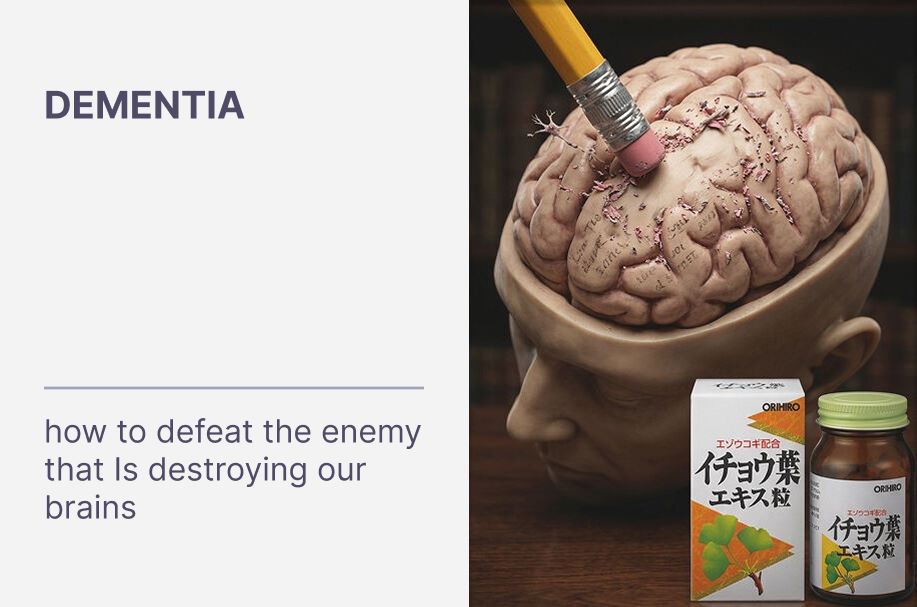
Dementia. A beautiful, unfamiliar, frightening word. Even without knowing its exact definition, we instinctively approach it with caution. In psychiatry, this term refers to a chronic brain disease that results in progressive cognitive decline and dementia.
And it is characterized by a number of unpleasant symptoms:
- Decreased concentration — it becomes difficult to focus on the task at hand
- Impaired memory and logical thinking
- Problems with orientation
- Emotional changes — calmness is replaced by outbursts of irritability, then apathy, within a short period
- Decreased self-esteem
- Development of depressive states
And this is just the tip of the iceberg. As it progresses, the disease leads to serious impairments of memory and intellect. Mild absent-mindedness and forgetfulness will seem minor compared to problems that threaten the health and even the life of the patient.

Over time, the situation worsens even more. A person suffering from dementia becomes unable to care for themselves. They are not accountable for their actions, cannot meet their basic physical needs, and even stop understanding the meaning of words — explaining anything to a person in this state is pointless. All that remains is to be patient and surround the patient with maximum care and attention.
How to Recognize Dementia at an Early Stage?
Paradoxically, the younger the patient, the faster dementia progresses. A fifty-year-old person full of strength can completely lose their capacity within just 2-3 years, whereas elderly people who develop dementia at 75-85 will experience a gradual progression of the disease over many years.
Unfortunately, the first symptoms of the disease often go unnoticed. They are attributed to fatigue or stress, mistakenly assuming that everything will resolve on its own over time. Meanwhile, it is crucial to recognize the first warning signs and start treatment in time.
You should be concerned of yourself or your loved ones:

- Experience difficulty with memory. This doesn't necessarily mean serious memory lapses. You should pay attention even if you find it harder to retain new information: a new acquaintance's name, dates or addresses, shopping lists, and other small details.
- Have problems with concentration, planning, and solving tasks. If you are spending more time on routine activities, this is a clear sign that your brain is not working as it used to.
- Experience rapid fatigue and lethargy. This condition is often combined with fussiness and chaotic actions that usually lead nowhere.
- Periodically lose focus. You have trouble following the thread of a conversation, get distracted, and sometimes cannot understand what exactly your interlocutor meant or what the subject of the conversation was.
- Many people experience these symptoms from time to time. Each of them individually is not dangerous and may indeed be a sign of severe overwork. But if two or more symptoms appear simultaneously, you should take this seriously and undergo an examination to detect the disease early and start treatment as soon as possible.
What Research Says About Preventing Age-Related Brain Changes
According to clinical studies, phosphatidylserine — a phospholipid that ensures the integrity of neuronal cell membranes and the transmission of signals between nerve cells — plays a crucial role in maintaining cognitive functions. Its level in the body decreases with age, which directly correlates with deterioration in memory and attention.
According to research data, phosphatidylserine is involved in the regulation of cortisol levels, reducing the effects of stress and slowing age-related cognitive decline.
Omega-3 fatty acids — DHA (docosahexaenoic acid) and EPA (eicosapentaenoic acid) — are also widely used in clinical practice. These substances accelerate the transmission of nerve impulses, increase stress resistance, and support brain function at the cellular level. Studies show that the combination of phosphatidylserine with DHA provides a synergistic effect for cognitive health.
Research on Key Components
Dr. Masaki Tanaka, a neuroscientist at the University of Tokyo, comments: "Dementia prevention should begin long before the first symptoms appear. Japanese pharmaceutical companies have created product lines that work as comprehensive brain support — from ferulic acid to phosphatidylserine. This is not magic, but a scientifically based strategy for longevity."
The table below summarizes key scientific data on components that support cognitive function:
| Component | Primary Mechanism of Action | Key Studies and Findings | Dosage in Studies |
|---|---|---|---|
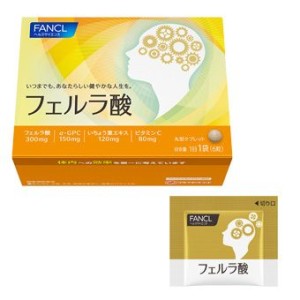
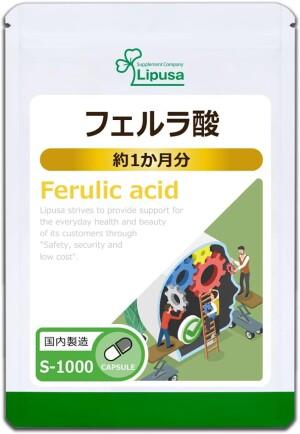
| Ferulic Acid | Antioxidant, suppresses β-amyloid accumulation, protects neurons from oxidative stress | Used in Japanese clinics for dementia treatment; in combination with other components reduces ADHD symptoms | As part of complex formulas |
| α-GPC (glycerophosphocholine) | Source of acetylcholine — a neurotransmitter responsible for memory and learning | Clinically proven improvement of cognitive functions in patients with Alzheimer's-type dementia | As part of complex formulas |
| Plasmalogens | Protect cells from reactive oxygen species, participate in intellectual processes | Slow the development of age-related dementia, improve memory and thinking speed | As part of complex formulas |
| NMN (nicotinamide mononucleotide) | Precursor to NAD+, restores mitochondrial function, supports cellular energy | Restores mitochondrial respiratory function in the brain; shifts mitochondrial dynamics balance from fragmentation to fusion | Animal model studies |
| Phosphatidylserine + DHA | Supports neuronal membrane integrity, improves attention and executive functions | Pediatric studies have shown improvement in cognitive performance | 100-150 mg PS + DHA per day |
| Ginkgo biloba | Improves cerebral blood circulation, antioxidant | According to the 2026 Cochrane review: moderate improvement in patients with diagnosed dementia; ineffective for mild cognitive impairment | 120-240 mg/day |
Preventing Dementia is Easier Than Treating It
And this is indeed true! It is impossible to stop the progression of dementia. At best, you can only slow the process down. But you can start preventing this disease right now, without waiting for pronounced symptoms to appear. To do this, follow these simple rules daily:

- Take care of your health. Get regular check-ups, prevent the development of chronic diseases, and give up bad habits. Did you know that smokers have a 70% higher risk of developing dementia? Remember this every time you feel like smoking.
- Review your diet. It has been proven that vitamins E and B12, as well as folic acid, improve brain function and prevent the development of dementia. Therefore, include nuts, fish, and fresh seasonal vegetables in your menu.
- Make your brain work. Lack of exercise is a sure path to degenerative changes. And in the case of the brain, this statement is 100% true! To keep your brain in good shape, make it work every day — read new books, learn foreign languages, solve crosswords and puzzles.
- Maintain an active lifestyle. Dementia more often comes to those who lead a passive lifestyle. Therefore, fill your life with interesting events, move as much as possible, set goals and achieve them. Daily activity stimulates the formation of new neural connections and serves as excellent prevention of brain cell destruction.
Top Japanese Supplements for Brain Support and Dementia Prevention
This supplement combines a powerful antioxidant with vitamin D3, which plays an important role in supporting the immune and nervous systems. Regular intake helps protect brain cells from oxidative stress. According to studies, low vitamin D levels are associated with cognitive decline, particularly in visual memory.
2. NMN + Tryptophan and Niacin for the Nervous System — Mirai Lab NMN 300+ Niacin + Tryptophan Plus
NMN (nicotinamide mononucleotide) is a molecule that supports cellular energy and slows aging. Animal model studies of Alzheimer's disease have shown that NMN administration restores mitochondrial respiratory function in the brain. In combination with tryptophan and niacin, this complex supports nervous system health and helps prevent cognitive impairment.

Omega-3 fatty acids DHA and EPA support not only the heart and blood vessels but also cerebral circulation, which is critically important for dementia prevention. Studies show that adding DHA enhances the cognitive effects of phosphatidylserine.
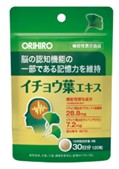
4. Ginkgo Biloba Extract for Improving Memory and Brain Function — Orihiro Ginkgo Leaf Extract
Ginkgo biloba has been traditionally used to improve cerebral circulation and cognitive function. According to the updated 2026 Cochrane systematic review, ginkgo biloba may provide moderate short-term improvement in people with diagnosed dementia, but shows practically no effect on people with subjective memory complaints or mild cognitive impairment.
5. Phosphatidylserine for Improving Mental Abilities — DHC PS Phosphatidylserine
This supplement contains phosphatidylserine, DHA, and EPA — components that support the health of neuronal cell membranes and improve memory, attention, and concentration. According to studies, phosphatidylserine helps reduce cortisol levels and increase stress resistance, which is also important for preventing age-related cognitive changes.
Q&A
❓ At what age should you start preventing dementia?
Answer: The earlier, the better. Prevention is recommended to start at 40-45 years, when cognitive decline becomes noticeable. However, if risk factors are present (heredity, stress, bad habits), you can start even earlier.
❓ What is more effective: ferulic acid or phosphatidylserine?
Answer: These have different mechanisms of action. Ferulic acid is a powerful antioxidant that protects cells from oxidative stress. Phosphatidylserine is a building material for neuronal membranes and a stress regulator. They can and should be combined for comprehensive brain support.
❓ Is it necessary to take vitamin D3 for the brain?
Answer: Yes. Studies show that low vitamin D levels are associated with cognitive decline and reduced visual memory. However, data on the benefits of vitamin D supplementation for cognitive function remains conflicting: some studies show improvement, others do not.
❓ Does ginkgo biloba help with dementia?
Answer: According to a major 2026 systematic review, ginkgo biloba may provide moderate improvement in people with diagnosed dementia, but is practically ineffective for mild cognitive impairment or subjective memory complaints.
❓ Are there any contraindications?
Answer: All supplements have individual intolerance. It is recommended to consult a specialist before taking, especially during pregnancy, lactation, and when taking medications.
Conclusion: Act Today to Preserve a Clear Mind Tomorrow
Dementia is one of the most frightening diseases of our time. But brain protection begins long before the first symptoms appear. The Japanese pharmaceutical arsenal includes powerful and safe means for preventing age-related changes that work at the cellular level.
✔️ The Japanese approach to longevity is systematic self-care: proper nutrition, an active lifestyle, and regular intake of proven dietary supplements. You can buy original Japanese supplements for brain support, such as ferulic acid, phosphatidylserine, omega-3, and NMN, in our online store. We deliver products directly from Japan with a guarantee of quality and authenticity.
Start taking care of your brain today — and it will reward you with clarity of thought and sharp memory for years to come.
📌 This article is for informational purposes only. It is recommended to consult a physician before taking any dietary supplements.